Permits
Dumpster Permits in Bloomington, Normal and Nearby
Driveway first: a Bloomington street spot needs an Engineering permit, Normal keeps roll-offs off the right-of-way, and IDOT has no container permit.
Sizing · 7 min read
Too small and you may need another pickup. Too big and you pay for space you do not use. Here is how we match the size to the job when you call.
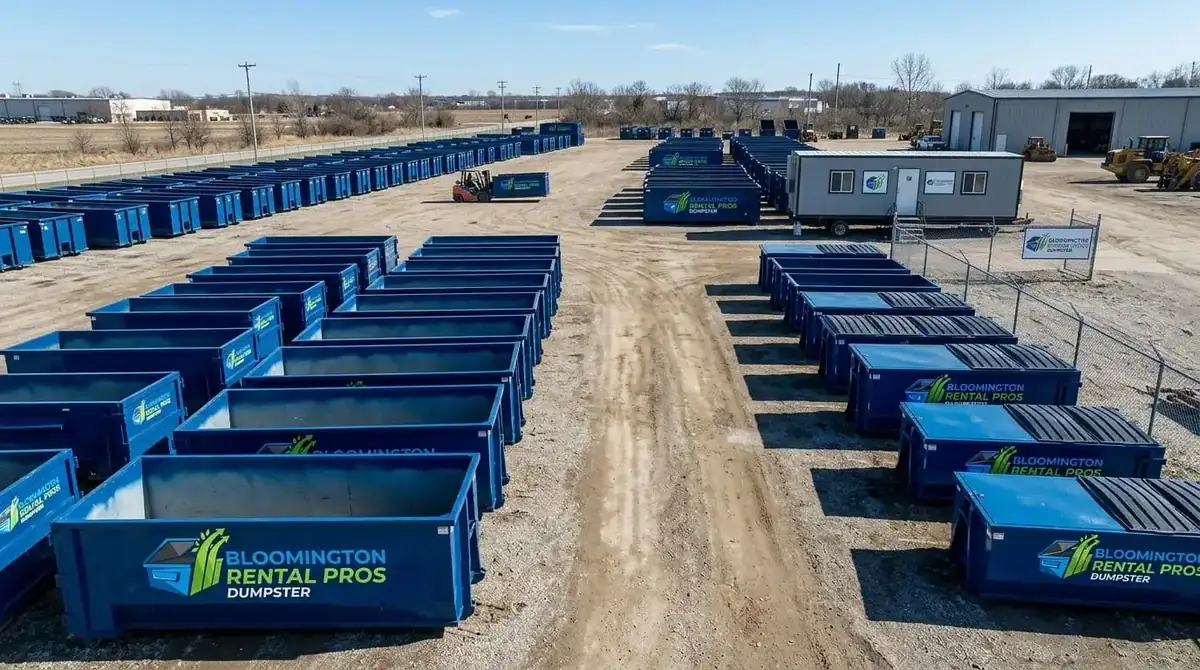
For most home projects in Bloomington-Normal, the 20 yard dumpster is the place to start. It is our most popular size and the sweet spot for many residential and light commercial jobs: kitchen and bath remodels, whole-home cleanouts, roofing projects and landscaping. Go 10 yard for small kitchen or bathroom remodels, roof tear-offs, concrete, tile or asphalt, single-room or garage cleanouts, or a tight driveway. Go 15 yard for garage, attic or basement cleanouts, flooring and carpet removal, small deck or fence removals and yard waste. Go 30 yard for multi-room or full-house renovations, estate or rental property cleanouts and demolition debris, and 40 yard for full construction or demolition projects, warehouse cleanouts and commercial roofing. Not sure? Call (309) 893-1463 and we size it for you.
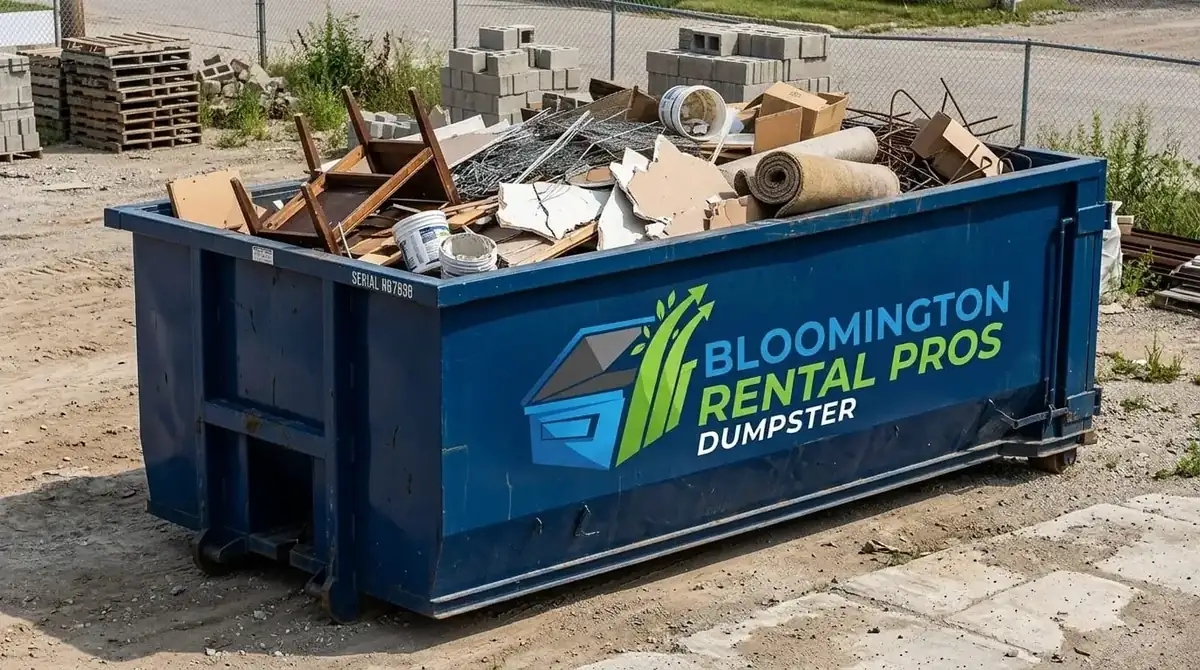
A few rules of thumb. Heavy materials such as concrete or shingles often need a smaller container, and the 10 yard works best when debris is dense and heavy rather than bulky. For a roof, our 10 and 20 yard dumpsters are the popular picks for shingles, tar paper and underlayment. For yard waste, the 15 or 20 is usually the fit. For construction and remodeling, the 20, 30 and 40 do the heavy lifting. And if the job grows, we can swap your dumpster for a bigger one.
All five are open-top roll-offs about 7.5 feet wide. The 10 and 15 are shorter boxes; the 20, 30 and 40 share a footprint of about 22 feet and simply get taller. Pickup loads and standard 33-gallon trash bags are a rough guide to volume. The weight column is the allowance a rental commonly includes, which depends on the debris type.
| Size | Approx. L × W × H | Holds about | Typical weight allowance | Typical job |
|---|---|---|---|---|
| 10 yard | 14' × 7.5' × 3.5' | 3 pickup loads (50–70 bags) | 1–2 tons | Small remodels, roofing, concrete, dirt |
| 15 yard | 16' × 7.5' × 4.5' | 4–5 pickup loads (80–100 bags) | 2–3 tons | Garage cleanouts, flooring, yard waste |
| 20 yard | 22' × 7.5' × 4.5' | 6 pickup loads (110–130 bags) | 3–4 tons | Remodels, roofing, large cleanouts |
| 30 yard | 22' × 7.5' × 6' | 9 pickup loads (170–190 bags) | 4–5 tons | Multi-room renovations, estate cleanouts |
| 40 yard | 22' × 7.5' × 8' | 12 pickup loads (230–250 bags) | 5–6 tons | Commercial jobs, major demolition |
Most people under-count the pile. Walk the house or the job before you call, estimate how many pickup loads you expect, and tell us what the material is. When we recommend a size we look at the type of debris, the project scope and the placement space. We can help estimate weight from roofing squares, flooring square footage or your material list, so you get the right box the first time.
Volume and weight are two separate limits. Furniture and household junk are bulky and light; tile, plaster, shingles, concrete, dirt and wet yard waste reach the weight line long before the box looks full. Each dumpster includes a standard weight allowance based on its size, and if your debris goes over, overage fees may apply based on disposal weight. If over half the load is dense material, a 10 yard may save you money, and for concrete, soil or brick we may suggest a 10 yard or split loads. Heavy materials mixed with household junk may need special handling or pricing, so tell us what you have.
Load evenly front-to-back and side-to-side, and keep debris below the top rail so the load can be tarped safely. Illinois law says no vehicle may be driven on a highway unless it is loaded so nothing can drop, shift, leak or escape (625 ILCS 5/15-109), and garbage and refuse trucks need a working tailgate and a cover or tarp (625 ILCS 5/15-109.1). An overfilled box may not be legal or safe to haul.
Check the length first: about 14 feet for a 10 yard, about 16 for a 15, and about 22 feet for the 20, 30 and 40. All are about 7.5 feet wide. Clear about 60 feet of approach space for the roll-off truck, more if it has to turn, and check overhead for branches and utility lines. A flat, solid surface such as a driveway, gravel or pavement works best. Move cars, bins and equipment out of the way, and mark the spot with cones, tape or chalk if you will not be there. If you are worried about the surface, lay plywood or boards under the wheels. The 10 yard is compact for tight driveways, the 15 and 20 fit many Bloomington driveways, and the 30 fits many two-car driveways.
In Bloomington, keep it on your property where you can. We found no City rule setting a permit, time limit or surface for a roll-off on a private driveway. A container in the street or City right-of-way needs an Engineering Division Dumpster Permit, applied for at least 3 business days ahead; it runs up to 30 days, needs lighted barricades front and rear, has to sit in a legal parking space in front of the property and must be covered when not in use. In Normal, roll-off boxes stay out of front yards and off the street right-of-way unless the Town gives temporary permission, and they go on a concrete or asphalt pad (Town Code § 21.1-4). The permit guide covers every town we list.
Bloomington's City bulk and building-waste pickup runs every other week, with the first bucket at no charge and $30.00 for each extra bucket (City Schedule of Fees, May 10, 2026). The City will not collect bulk or building waste from any work done by a contractor, or contaminated broken concrete, bricks, rock, stone or reclaimed asphalt (§ 21-307), and its Citizen Convenience Center no longer takes concrete, rock, shingles or brick and is not open to contractors. That works for a few pieces, not for a remodel.
Normal draws the same line. Town pickup takes items of no more than 500 pounds and no brush or construction waste created by a contractor (§ 21.1-3), and the Town's Bulky Waste page says property owners "must rent a commercial dumpster from a private firm" for major renovations such as re-roofing, for tearing out concrete driveways and sidewalks, and for debris over 500 pounds. A roll-off is for the pile that is bigger, heavier or sooner than any of that allows.
Describe the job on the phone, with the materials, the scope and the timeline, and we recommend the size that fits. If the project grows, we can schedule a swap-out or an upgrade.
From this guide
A 10 yard covers a small kitchen or bathroom remodel. A full kitchen and bath remodel is usually a 15 or a 20, and once the work spreads to several rooms or the whole house, a 30 is the usual call.
Our 10 and 20 yard dumpsters are the popular picks for roofing shingles, tar paper and underlayment. Shingles are heavy, so the weight usually decides it. Tell us the number of roofing squares and we can help estimate the weight.
A 10 or 15 yard handles a typical garage cleanout. Our 15 or 20 yard containers are often the fit for yard waste, tree trimmings, soil and landscaping debris. Keep yard waste as its own load. A whole-home cleanout is usually a 20 or a 30.
Usually. It is about 22 feet long and 7.5 feet wide and fits many standard driveways. Clear about 60 feet of approach space for the truck, keep the spot clear of branches and wires, and choose a flat, solid surface such as a driveway or pad.
Keep reading
The rest of the series, same approach — official sources, no filler.
Permits
Driveway first: a Bloomington street spot needs an Engineering permit, Normal keeps roll-offs off the right-of-way, and IDOT has no container permit.
Cost
What a flat-rate dumpster quote covers in Bloomington, what moves the price, the 10-yard average, and the city fees and drop-off limits worth knowing.
Guide
Everything in one place: how a roll-off rental works in Bloomington-Normal, sizes and weights, placement and permits, landfill bans and covered loads.
Ready when you are
Call (309) 893-1463 with the address and what is going in. A quote and a delivery window before you hang up.
(309) 893-1463Open 24 hours, 7 days